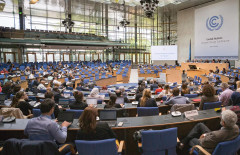
In light of increasing geopolitical instability and mounting concerns about global energy security, the meetings of the 64th Subsidiary Bodies (SB64) to be held in Bonn in June 2026 will be an important opportunity for the UN climate system to demonstrate the continued value of international cooperation.
Governments face simultaneous pressure to accelerate the transition to clean energy, ensure reliable and affordable access to energy sources, protect local industries, and respond to the increasingly severe and recurring effects of climate change; And all in a context of uncertainty and economic volatility. Against this backdrop, the ability of the United Nations Framework Convention on Climate Change (UNFCCC) to support coordinated, credible, relevant and compelling international action for all is more critical than ever.
At the same time, the United Nations climate system itself is going through a new phase. After the conclusion of the first Global Outcome (GST1) and the first full cycle of the Paris ambition, the era of foundational negotiations is over, and the central challenge now is to demonstrate that the Framework Convention can drive implementation with the speed and scale required.
And the 31st Conference of the Parties (COP31) to be held next November in Antalya, Turkey – and the SB64 meetings – will be crucial opportunities to show how the UNFCCC process and climate conference outcomes can improve the geopolitical environment and enhance confidence in collective climate action. And if COP31 succeeds, it may ultimately be remembered not only for making progress in implementing the Paris Agreement, but also for enhancing the broader value of multilateral cooperation at a time of growing international turmoil.
To achieve this, COP31 will have to confront increasingly common narratives that portray the Paris Agreement as ineffective or detached from economic and political realities. Parties will have to demonstrate that multilateral climate cooperation remains a key pillar for delivering effective climate action in a way that resonates not only with governments, but also with people around the world, including the private sector and other non-party actors.
The SB64 meetings will be a pivotal moment to unlock the political momentum needed to ensure the success of COP31. It is critical that parties arrive prepared and motivated to make tangible progress across a wide range of mandatory tasks.
And since the meetings of the subsidiary bodies take up two of the three weeks of formal negotiations held annually by the UNFCCC, it will be necessary to use the time in Bonn to prepare semi-final draft resolutions for adoption, as has been the practice in the past. More recently, the meetings of the subsidiary bodies have stalled due to protracted differences on agendas, and have failed to push the texts of the negotiations to a level of maturity that allows them to be easily adopted, putting the conferences of the parties (COPs) – already suffering from a busy agenda – under unnecessary additional pressure. And if the parties can make substantive progress in technical negotiations during SB64 meetings, COP31 could focus on resolving the most contentious political issues, improving procedural efficiency, reducing negotiation bottlenecks, and helping restore confidence in the multilateral climate process. And at a time when the multilateral system is under intense pressure, including shrinking UN budgets, the two weeks of SB64 must be exploited to maximize progress – not wasted.
What are the binding tasks in SB64 meetings?
2026 reviews
A number of work programs and institutional processes are scheduled for review in 2026, providing an opportunity for SB64 meetings to shape the future structure of the UNFCCC.
This program – currently the only formal item on the agenda specifically dedicated to mitigation ambition and implementation – is set to conclude its work, with the possibility of considering an extension in 2026. Parties at SB64 meetings are expected to begin discussions on the effectiveness of the work program and possible options for its continuation. To avoid losing the program altogether, Parties may need to consider opportunities to improve its efficiency and political relevance, including enhancing synergies with other UNFCCC processes and ensuring clearer linkages to implementation and investment outputs.
As this four-year joint work is mandated to submit its report to COP31, Parties are expected to review the progress and outputs achieved so far. Discussions at SB64 meetings could also begin to explore possible next steps, including extending joint action, establishing an alternative work program or agenda item, or advancing work on agriculture and food systems through other institutional channels.
The UAE's Just Transition Program of Action (JTWP): With a mandate to conduct a review of the effectiveness and efficiency of this program and to consider its continuation in November, it is expected that the parties at the (SB64) meetings will set the terms of reference for this review.
Technological Mechanism (TM): The SB64 meetings are expected to commence the second periodic assessment of the Technology Mechanism, and further consider the harmonization of the processes for the review of the Climate Technology Center and Network and the periodic assessment of the Technology Mechanism.
Action for Climate Empowerment (ACE): The mid-term review of the Glasgow Program of Action on Climate Empowerment has been commissioned in 2026, and preparatory discussions may begin to formulate projections on effectiveness, implementation gaps, and future priorities.
Article 6.8: SB64 meetings will launch a review of the work program under Article 6.8 on non-market-based approaches, providing an opportunity for Parties to assess its effectiveness.
The synchronization of these reviews gives the parties an opportunity to take a step back and reflect on what is going well, what may require reform, and whether the growing number of action programs is being strategically and effectively exploited. And there may also be scope to consider how to enhance synergies across different processes while avoiding redundancy and dispersion.
And most importantly, for the work programs under renewal, Parties can also consider assessing how to better align timelines, inputs and outputs with the five-year Paris Ambition cycle, so they can more efficiently support implementation and enrich the outputs of the next global outcome.
Other key negotiations in meetings (SB64)
In addition to the above revisions, SB64 meetings will also advance negotiations on key issues, including:
Adaptation: Subsidiary bodies are mandated to undertake substantive work to improve the metadata and methodologies of the Belem Adaptation Indicators, including the establishment of a technical task force to contribute to this work. The "Belem-Addis Vision" on adaptation is a two-year policy alignment process developed by Parties at COP30 to: (1) test the Belem adaptation indicators, including consultation with relevant practitioners and other stakeholders; and (2) use these indicators as appropriate and needed in their reporting and planning processes. Parties at SB64 meetings will also need to further define the technical and structural elements of the Belem-Addis vision on adaptation, which will be concluded at COP32.
Global Outcome (GST) At COP30, Parties invited the Chairs of subsidiary bodies to ensure that sufficient time was available for each stage of the global outcome. With preparations for the launch of the second Global Outcome (GST2) at COP31, some Parties and non-Party actors have expressed the wish that the Chairs of the subsidiary bodies set the timetable for the GST2 process, including the expected start date of each phase, and whether to hold meetings or intersessional work.
Climate Finance: In the COP30 decision, the Parties decided to initiate the establishment of a new work program on climate finance, including Article 9.1 (on the responsibilities of developed countries in providing climate finance) in the context of Article 9 as a whole (on climate finance more broadly).
Based on discussions at SB62 and SB63, Parties are expected to discuss ways to enhance the inclusiveness of cooperation with other international organizations, including the Rio Conventions. These discussions will take place in the context of: (1) the "Year of the Tripartite Conferences of the Parties", where all the Rio conventions will be held, (2) ongoing work under the umbrella of the UN Reform Initiative (UN80), including work to improve and synergize multilateral environmental agreements under Action Package 27, and (3) discussions on how to achieve the UN Sustainable Development Goals (SDGs) in the second half of this crucial decade, what the post-2030 development framework might look like, and how to maximize the synergy between climate and development.
Mandated Events
Besides formal negotiations, SB64 meetings will host several mandated events. Although these processes are not necessarily expected to produce draft negotiating texts or formal resolutions, they are still capable of playing an important political and strategic role.
Some of these events include:
A hybrid workshop from 8 to 10 June will focus on progress, challenges and opportunities related to identifying needs and accessing means to implement climate action in agriculture and food security, including sharing best practices.
The inaugural workshop will take place on 9 June and focus on the initial implementation of activities under the Baku Adaptation Roadmap, convened by the Chairs of subsidiary bodies with the support of the Secretariat; Topics include: Alignment of adaptation work in the context of the Paris Agreement temperature target; and promoting coherence; and implementation of the United Arab Emirates Framework; knowledge sharing; and ensuring access to means of implementing adaptation.
The Veridas Dialog on Article 2.1(c) of the Paris Agreement: At COP30, the parties agreed to establish the new Veridas Dialog, to be held on 10 June, to continue discussions on Article 2.1(c) relating to the alignment of all financial flows – public and private, domestic and international – with its temperature and flexibility objectives of the Paris Agreement.
Annual Dialog on Oceans and Climate Change: The annual dialog on oceans and climate change on 10 and 11 June will focus on priorities for the ocean’s Nationally Determined Contributions (NDCs), means of implementation, synergies between the ocean, climate and biodiversity, and international cooperation.
UAE Dialog on the Implementation of Global Outcome Outcomes: The first UAE Dialog on the Implementation of Global Outcome Outcomes will be held on 10-11 June.
Third session of multilateral facilitative considerations for progress: The SB64 meetings will host the third session of the Multilateral Facilitation Considerations for Progress (FMCP) on 10 and 12 June, which will include presentations from 37 Parties representing 50% of global emissions.
Dialog on mountains and climate change: The dialog scheduled for 12 June will focus on sharing knowledge from practical experiences to advance climate action in mountains through Nationally Determined Contributions (NDCs), National Adaptation Plans (NAPs), Two-Year Transparent National Reports (BTRs), identifying mountain entry points across UNFCCC areas of work, and the potential need for an annual mountain dialog.
Climate and trade dialog: This first Climate and Trade Dialog is being held on 13 June by subsidiary bodies with the participation of Parties and other stakeholders – including the International Trade Center (ITC), the United Nations Conference on Trade and Development (UNCTAD), and the World Trade Organization (WTO) – to consider opportunities, challenges, and obstacles related to strengthening international cooperation on the role of trade.
Annual Dialog on Nationally Determined Contributions to Global Outcome: The third and final dialog of NDCs for the Global Outcome will be held on 16 June. Parties will consider the possibility of reviving these dialogs after the second global outcome (GST2).
In many cases, these binding events provide opportunities to test emerging ideas, identify meeting points across negotiation topics, highlight implementation challenges, and build political understanding ahead of COP31.
And as parties and others participate in these events, it will be important to link technical deliberations to the broader political and economic reality shaping climate action globally. Demonstrating the ability of the UNFCCC process to help support investment certainty, economic resilience, development priorities, and international cooperation may be key to maintaining confidence in the multilateral system in the years ahead.



comments