By: Dina Esfandiari is the head of economic geography for the Middle East at Bloomberg Economics and the author of New Order in the Gulf: The Rise of the United Arab Emirates.
Becca Wasser is a senior policy analyst at the RAND Corporation, where her main areas of research include war games, international security, U.S. defense, and foreign policy in the Middle East.
Ziad Daoud is chief emerging markets economist at Bloomberg Economist and a senior fellow at Harvard Kennedy School.
Publisher: American Time Magazine
Translation and editing: Tomorrow Risk Management Foundation: Nasr Muhammad Ali
Nearly two weeks after the outbreak of the war between the United States and the Zionist entity with Iran, the economic, political and military costs of this conflict on the region and the global economy are prohibitive and are increasing day by day. Iran’s swift and widespread response to U.S. military bases in the region, its waves of drone and missile attacks on the Persian Gulf countries targeting hotels, airports, and energy infrastructure, and its de facto closure of the Strait of Hormuz, collectively constitute a costly nightmare for the Gulf states.
The Gulf states have invested heavily in building a carefully orchestrated image as a haven of stability and prosperity in the troubled Middle East. Thriving, vibrant cities, packed with global sports activities, conferences, and diverse food options, promise a better and more comfortable life for all. And at a time of economic and political uncertainty in Europe and the United States, the UAE has attracted hundreds of thousands of expats looking for well-paying jobs, low taxes and stability, especially after the COVID-19 pandemic.
The Iranian attacks, and the widely circulated photos and videos of rising flames from a hotel, airport and port in the UAE, as well as the region’s energy infrastructure, highlight a degree of fragility and threaten that sense of security and prosperity. And even if the war ends soon — which seems unlikely at the moment — the Gulf states will have to deal with its fallout for years to come.
A Major Security Challenge in the Gulf
The social contract between Gulf rulers and their citizens – the growing majority of whom are foreign residents – is based on the rulers ensuring the livelihood, comfort, and security of the population in the face of support. And so the UAE's ruling families were quick to reassure the public. On the evening of March 2, Mohammed bin Zayed, President of the United Arab Emirates, and Sheik Hamdan bin Mohammed bin Rashid, Crown Prince of Dubai and Minister of Defense, toured the Dubai Mall to emphasize that their country was safe.
The war has exposed the region's military and security weaknesses. "For years, the sparsely populated Arab Gulf states relied on U.S. security protection." It has bought American weapons, hosted and financed American military bases, and in some cases even sent its soldiers to fight alongside American forces in Afghanistan and against the terrorist organization ISIS.
When President Donald Trump returned to the White House, the Gulf states gave him a rousing reception: They welcomed him on his first major foreign visit, and pumped extra oil into the market months later production restraint, and pledges of billions of dollars in investments and purchase contracts, all to maintain Trump’s support. However, when the need intensified, the Zionist entity's relentless efforts to wage an American war with Iran overshadowed the efforts made by the Gulf countries to avoid an American war with Iran.
The Gulf states had placed their trust in integrated air and missile defense systems, bypassing their established security reservations to share intelligence and radar imagery in real time – even with the Zionist entity. It purchased air defense systems such as Patriot and THAAD, with each battery costing between $350 and $400 million. Most incoming projectiles were intercepted, but they were not fully impervious.
And Iran has exploited a glaring cost imbalance: its one-way attack drones cost between $20,000 and $50,000 per aircraft, while the interceptors used to destroy them cost $4.19 million each. And so the Gulf states found themselves on the losing side of the cost equation, running out of interceptor aircraft under the weight of the initial Iranian bombing intensity. And expensive fighter jets and helicopters quickly shot down cheap drones.
The Iranian attacks also exposed the limits of coordination among Gulf states. "While the war has eased some tensions between Saudi Arabia and the UAE, the two countries - and their neighbors - have struggled to forge a coherent collective response to Iranian strikes." Part of this difficulty is due to structural factors: joining U.S. attacks would inevitably lead to a more virulent Iranian response against Gulf targets. The crisis also reveals the failure of the hedging strategy pursued by the Gulf states, namely, to ally with the United States, and to keep the Zionist entity at a distance (except the UAE), while at the same time engaging with Iran and seeking to contain it. This budget has failed to keep the Gulf out of the conflict.
Oil and Gas and the Gulf Economies
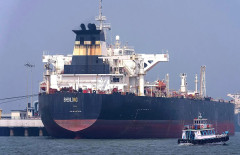
The economic costs are real. "For decades, the Gulf states have established themselves as reliable energy suppliers, deliberately avoiding the use of oil and gas as a weapon after the 1970s." Even during the 2017 blockade of Qatar by Saudi Arabia, the UAE, Bahrain, and Egypt, Doha continued to supply the UAE with gas through pipelines. But Iran’s attacks on energy infrastructure and the unrest now ravaging the Strait of Hormuz — through which 20% of the world’s oil passes and about 20% of the world’s LNG supply — have shattered that tradition of restraint. And Qatar Energy has warned that it can no longer guarantee LNG supplies to its customers after an Iranian drone attacked the world’s largest LNG facility. And customers are already frantically searching for alternative supplies.
Disruption of energy flows is a major concern for the global economy, and Iran is well aware of this. And I’ve learned for now that disrupting the Strait of Hormuz is relatively easy and inexpensive: low effort and high impact. And that means it will probably cross the red line again. And Ali Larijani, the head of Iran’s National Security Council, threatened on Tuesday via the “X” platform, saying: “Either the Strait of Hormuz will be a strait of peace and prosperity for all, or it will be a strait of defeat and suffering for warmongers.”
Aside from hydrocarbons, the most successful area of economic diversification in the Gulf has been in the logistics and transportation sectors. However, the war is hampering air and port traffic throughout the region. Geography continues to tip the balance of the Gulf centers over their rivals, and if the fighting stops soon, the damage may be contained. Prolonged conflict will severely damage logistics networks.
There is an invaluable cost: the loss of life. In fact, labor shortages are a potential third economic cost of war in the region. "The Gulf region has the highest proportion of foreign residents and workers in the world, and continued instability could prompt some to reconsider their future there." However, this risk may be exaggerated. In places like Dubai, millions of expatriates have settled in and seem more inclined to wait for the conflict to end.
The cost to the Gulf region of this war will ultimately depend on its duration. If the heavy fighting ends in three to four weeks, the shock may be temporary. A longer-term war has deeper implications, disrupting energy flows, destabilizing investors, and gradually undermining the Gulf’s reputation as a region of security and stability.



comments