The European Bank for Reconstruction and Development (EBRD) warned that the escalation of the conflict in the Middle East is likely to weaken economic activity in the areas where it operates, citing high energy and fertilizer prices, disruption of trade and tourism flows, and tightening financial conditions.
And in its latest regional economic update, titled “The Potential Economic Impact of Conflict in the Middle East,” the bank explained how geopolitical tensions are reflected in commodity markets, supply chains and global financial systems.
"This conflict shows how quickly geopolitical shocks are shifting into energy markets, supply chains and financial conditions," said Piata Yavorczyk, senior economist at the bank. "The rise in energy prices comes at a time when the European manufacturing sector is already facing significant challenges, while the wider fallout from the conflict is likely to squeeze the budgets of governments already reeling from high defense spending burdens in Central Europe and high debt service costs in the Southern and Eastern Mediterranean and Sub-Saharan Africa. And the effects of the conflict are likely to continue even after the end of hostilities.”
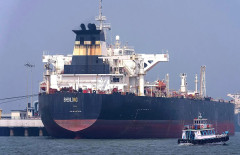
According to the report, the rise in energy prices is due to disruptions in production and transportation routes in the Gulf, and although oil and gas prices remain below historical levels, the bank warns that relatively inelastic demand in the short term may push prices up significantly if these disruptions continue.
The bank estimates that if oil prices stay above $100 a barrel for a long time, coinciding with continued supply chain disruptions in the chemicals and metals sectors, global economic growth could decline by at least 0.4 percentage points, while inflation could rise by more than 1.5 percentage points. And under these circumstances, growth forecasts in the Bank’s regions may be cut at similar rates in the coming projections.
Gas markets are also facing increasing pressure, with storage levels in Europe significantly lower than in recent years, and even if the conflict ends quickly, prices may not fall immediately due to the need to replenish inventories and restore LNG production.
And the conflict is not limited to the energy sector, but extends to agricultural production inputs and industrial supply chains, as a large proportion of fertilizer raw materials pass through the Strait of Hormuz, raising concerns about high food prices. Disruptions to trade routes in the Gulf could also affect supplies of aluminum, sulfur, helium, petrochemicals and plastics, increasing inflationary pressures.
And trade relations with the GCC remain important for a large number of economies within the Bank’s scope, while direct trade with Iran is limited. And countries that rely on transit routes through the Strait of Hormuz, such as Iraq, face increased risks, although the presence of reserves of basic commodities such as wheat provides some protection.
Tourism and remittances are also additional channels of vulnerability, as tourism-dependent economies such as Jordan may see a decline in visitor numbers, while remittances from the Gulf countries, which are vital to economies such as Lebanon and Egypt, may decline.
And financial conditions have already begun to tighten, with bond yields rising in the southern and eastern Mediterranean and in Turkey, and although capital outflows remain limited so far, the bank warns that they could accelerate if global financial conditions worsen.
And countries that rely heavily on energy, fertilizer and food imports, are economically linked to the Gulf, and suffer from limited fiscal space, are the most vulnerable, including Egypt, Iraq, Jordan, Kenya, Lebanon, Moldova, Mongolia, North Macedonia, Senegal, Tunisia, Turkey and Ukraine.
And in the longer term, the Bank believes that conflict could accelerate shifts in the structure of the global economy, while enhancing the importance of energy security and deepening fragmentation in trade, especially in the areas of energy and vital raw materials. And commodity exporters, such as Russia, generate additional revenue as a result of higher prices.
And the European Bank for Reconstruction and Development (EBRD) said it was ready to continue supporting its clients in the face of the economic fallout from the ongoing crisis.


comments