By: Raad Al-Qadiri
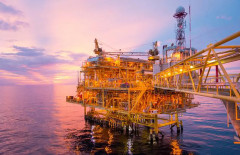
Something unexpected is happening in the Iraqi oil sector: After years of absence and watching Chinese and European companies dominate the scene, U.S. energy companies are making a comeback. ExxonMobil, Chevron, HKN and oil services giant KBR have signed major deals with Baghdad in the past two months, while GE Vernova is expanding its operations in the electricity sector.
Oil deals. A tool of political leverage
Iraqi Prime Minister Mohammed Shi'a Al-Sudani seems to have realized what the Kurdistan Region realized a long time ago: That oil and gas deals can buy political influence in Washington. Al-Sudani hopes that these new contracts will give him U.S. support for a second term as prime minister. Thus, the recent activity is not just an economic trend, but a calculated political dance between Baghdad and Washington.
However, it is unclear whether this strategy will actually work in favor of Sudan or American companies, as its future depends on the outcome of the upcoming Iraqi elections and the complexities of forming a new government. Everything in Iraq can be turned upside down by political calculations, making the increased interest of U.S. companies a risky proposition.
Clearly economically motivated
Commercially, the math is simple: Iraq has the cheapest oil in the world to produce, and in huge quantities that attract major international companies. Few countries combine low extraction costs with such vast reserves as Iraq. For companies looking for new long-term resources after declining production elsewhere, Iraq remains the last great opportunity.
ExxonMobil and Chevron are also seeking to diversify production sources in anticipation of potential issues in Kazakhstan, where both have large assets at risk of contract modification to favor the government there. If they run into difficulties in Kazakhstan, Iraq could be a strategic alternative to offset any losses.
More importantly, the new contracts are radically different from the technical service agreements offered by the Iraqi Oil Ministry in 2009, which were based on fixed fees per barrel with limited profits, alienating U.S. investors at the time. The new contracts give companies a larger share of the profits and access to volumes of crude oil that they can freely trade, a more flexible and profitable formula.
Political calculations in Baghdad
Beyond the economic motives, these contracts come in the context of delicate political calculations. Al-Sudani is seeking to establish his image as an effective prime minister ahead of the elections, based on huge investment projects that he started with agreements with Total Energies in 2023 and BP in 2024. These projects form the backbone of his electoral campaign, as he presents himself as having brought about a qualitative shift in the Iraqi administration.
But behind this ambition lie real fears of Washington. Recent tensions over Iraq's economic and political ties with Iran, and accusations of Iranian oil smuggling, have sparked concern in Baghdad that U.S. sanctions could be imposed on Iraq's oil sector, the lifeblood of the national economy. The government also fears that potential Israeli strikes against pro-Iranian factions inside Iraq could lead to a dangerous escalation, and believes that only the United States can restrain Israel.
Therefore, the Sudanese are trying to curry favor with the Donald Trump administration by offering what the administration considers to be the most valuable thing that can be offered: Business opportunities for U.S. companies.
An expanded version of the Kurdistan experiment
This approach is not new, inspired by the experience of the Kurdistan Regional Government (KRG), which has used small energy deals to boost its considerable influence in Washington. Sudan is applying the idea on a larger scale, using oil contracts as a shield against U.S. sanctions and a means of gaining political support. He is betting that billions of dollars in investments will make U.S. companies a de facto lobbyist for Baghdad in Washington.
Despite some partial results, Washington has not completely removed its hand. In October, the US Treasury Department sanctioned the General Engineer Company, which is linked to the Kataib Hezbollah militia, in a move that was seen as a blow to Sudan. He also faces internal challenges due to his complex relationship with armed factions, which is unlikely to be resolved soon, leaving the risk of sanctions looming.
Elections. Unknown paper
The elections scheduled for November could completely reshuffle the deck. Sudani is favored to win a simple majority and is positioning himself as the guarantor of relations with Washington. However, his rival Shia rivals are seeking to unseat him, arguing that he has become too independent and that his popularity is a threat to their interests.
Washington, while benefiting from the deals, is still wary of Sudan and sees him as prone to compromise with Iran. If he loses the support of the major Shia blocs, or faces opposition from Tehran-aligned coalitions, he may be replaced by a more flexible and less independent figure.
Al-Sudani's departure will cause Iraq to lose its most efficient prime minister since 2003, as he was known for speeding up negotiations and resolving complex files in an unprecedented manner, something that US companies do not guarantee will continue with any potential successor.
Big Opportunities, Big Risks
Despite the influx of U.S. investment, political considerations remain paramount. The relationship between Baghdad and Washington is constantly fluctuating, and if it deteriorates, these investments could become a means of pressure rather than cooperation. On the other hand, Baghdad can also use these contracts to send political messages if differences with Washington escalate.
In the end, despite the attractive returns, American companies are betting that the political winds will remain favorable. But as investors in Iraq know all too well, windows here open and close quickly, often without warning.





comments