


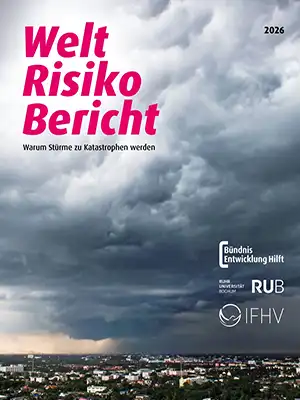
Why do storms turn into disasters?
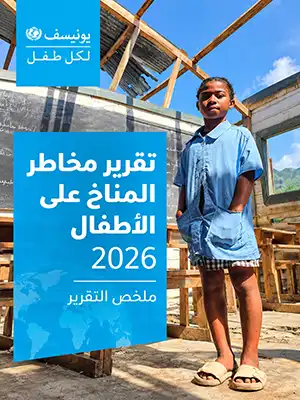
Storms are among the most destructive natural hazards. It causes more economic damage than any other extreme weather phenomenon, and, after earthquakes and extreme temperatures, it takes the most lives. The Global Risks Report 2026 therefore asks the question: Why does the storm itself turn into a disaster in one country, while its consequences remain limited in another?
The answer rarely lies in the wind alone. While hurricanes do not become more frequent globally, they become more intense and, increasingly, suddenly gain strength just before they reach the coast. This shortens the period of time during which people can be warned and enabled to take shelter. Wind does not cause most of the deaths, but water from storm surges and floods. However, the storm's transformation into a disaster depends primarily on societal fragility. Wind power itself hits larger populations, weaker buildings, and lower levels of protection in poorer countries and fast-growing coastal cities. Three key approaches stand out:
Early warning systems save lives only if they reach everyone. "Too often, these systems rely on wind speed alone, ignoring people who do not speak the language, have mobility difficulties, or lack safe shelter." Effective warnings focus on the individual, not the risk alone.
Social safety nets are usually associated with poverty, not fragility. And as a result, the most vulnerable often remain unprotected. In places where the state is absent, informal networks, such as neighborhood support, help people get through crises, but they quickly reach their capacity limits during major storms. And formal and informal safety nets are not incompatible, they must complement one another.
Migrant remittances worldwide exceed official emergency assistance. After storms, these remittances flow quickly and directly, but remain largely unnoticed in disaster management. At the same time, they only reach families with relatives abroad and can therefore exacerbate existing inequalities.
The message of the report is also a call to action. The storm's transformation into a catastrophe is not a matter of fate, but the result of political decisions. And fragility can be reduced. And protection is real protection only if you exclude no one.
Fill in the fields, and we will contact you to complete the submission process.
comments