By Dr Nadeem Jan - Former Pakistan Health Minister - Pakistan Observer
While some media analysts continue to make a fuss about fringe issues, and the public is preoccupied with endless arguments about reciprocal statements, there are more pressing challenges that call for our collective focus. The world has entered a new phase of uncertainty, in which traditional notions of national security have changed. The vulnerabilities of nations are no longer limited to their geographical borders or traditional battlefields, but extended much further.
A state can be weakened without a single soldier crossing its borders. energy supplies may be disrupted, financial networks paralyzed, food distribution systems compromised, communications disrupted, and public confidence eroded. Cyber attacks, economic coercion, technological competition, media misinformation, and supply chain disruptions have become increasingly used tools in strategic competition.
Thus, the next major global crisis may not begin with a declaration of war, but may arise from a series of disturbances that at first glance seem unrelated, but gradually accumulate to eventually turn into a large-scale systemic emergency.
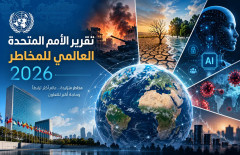
The World Economic Forum's Global Risks Report 2026 identifies the "geoeconomic confrontation" as the first global risk during 2026, and the most important within its forecast for the next two years.
Economic instruments, such as trade restrictions, sanctions, capital controls, technological constraints and reliance on supply chains, are increasingly being used to achieve geopolitical objectives. This represents an important shift in international relations; Economic interdependence, previously seen as a stabilizing factor, can also become a source of strategic vulnerability.
Countries that rely on specific suppliers, shipping routes, energy sources, or technology platforms may find themselves under pressure beyond their control.
And the International Monetary Fund’s World Economic Outlook in October 2026 predicts that global economic growth will reach 3.1% during the year, warning at the same time of the risks of geopolitical escalation, renewed trade tensions, financial vulnerabilities, and the possibility of reassessing investments in artificial intelligence.
Worryingly, the resilience of the global economy is increasingly uneven, with various parties indifferent to the magnitude of the accumulated risks.
Hybrid warfare... the most influential threat
Of all the threats, the breadth of hybrid warfare stands out as the most impactful and disruptive. Modern societies rely on interconnected systems that operate largely out of the public's eye. These invisible infrastructure of daily life include power grids, telecommunications, submarine cables, ports, airports, payment networks, hospitals, food warehouses, and drug distribution systems.
And disabling one of these components could trigger a series of escalating reactions that feed themselves. Let's take food supply chains as an example. Food security is no longer just a matter of agricultural production, it is also dependent on electricity, refrigeration, transportation, storage, digital inventory management systems, ports, and financial transactions.
A cyber attack targeting a cooling network may seem like a limited technical incident, but the same vulnerabilities could affect warehouses, pharmaceutical facilities, and food distribution networks, and their repercussions extend to public health, consumer prices, and economic confidence.
The same principle applies to the banking, energy and telecommunications sectors, and to a wider range of governance and state administration.
And the European Union’s Cyber Security Agency (ENISA), in its September 2026 Threat Scene Report, points to the ever-increasing overlap between geopolitical developments, cyber threats and interconnected digital systems.
And it is becoming increasingly clear that the security of the modern state depends on the ability of regimes that have historically been treated as mere independent commercial infrastructure to withstand upheaval.
And economic disruption may become one of the most effective tools of strategic pressure. Shocks to the energy sector can raise production and transport costs, shipping disruptions can delay the arrival of essential imports, and restrictions on bio-metals and semiconductors can affect manufacturing, while financial sanctions and restrictions on payment systems can hamper international transactions.
And the World Bank's Commodity Markets Outlook report released in October 2026 predicts that overall commodity prices will rise 23% during the year, with energy prices expected to increase by 32%.
And conflict-related supply disruptions and pressures from climate change are among the main drivers of these increases.
These developments illustrate how geopolitical events can quickly turn into domestic economic problems. And the risks are multiplied when inflation, public debt, currency price pressures, and households' purchasing power decline interact. Governments with limited fiscal space may find it difficult to protect the most vulnerable populations, while maintaining essential public investments.
Cyber Threats and Financial Misinformation
The October 2026 IMF report identifies cyber threats, rising sovereign bond yields, and the possibility of a market correction from AI-related investments as important risks to financial stability.
Thus, a cyber incident targeting a major payments network or a major financial institution could have repercussions well beyond the immediate technical disruption.
Another dimension that deserves equal attention is the manipulation of public trust. Misinformation can magnify almost any crisis. False reports of bank collapses can encourage depositors to withdraw their money, and rumors of fuel shortages can lead to long lines at filling stations.
And fabricated news of food shortages may push people into overstocking, while misinformation about disease outbreaks can undermine public health response efforts.
The World Economic Forum also identified misinformation and disinformation among the most prominent global risks in the near term. In an interconnected society, trust is an important economic asset. And when public confidence declines, even easily contained disruptions can turn into crises with far more damage than they actually do.
Therefore, governments need to recognize that crisis communications management is not just a public relations activity, but an essential component of national security.
But our government, it seems, lives in another world.
Biological and health threats
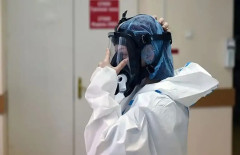
Biological threats represent another dimension of the risk equation. The February 2026 WHO assessment acknowledged that significant progress has been made in global pandemic preparedness, but warned that this progress remains fragile and uneven among countries.
And any future health emergency could complicate and exacerbate economic and geopolitical disruptions. And hope remains for strengthened national preparedness, surveillance and health surveillance systems, and global coordination based on the principles of equity and equality.
The Correlation of Risks... The Most Prominent Characteristic of the Next Crisis
The defining feature of the coming crisis, unfortunately, may be the interdependence of its elements and repercussions. A regional conflict could disrupt energy supplies, and high energy prices could increase food and transport costs. And shipping delays could affect drug imports, while cyber attacks could disrupt logistics and financial transactions.
And at the same time, disinformation campaigns can undermine trust and cause panic. Each of these events may seem manageable at first, but their interdependence can produce a much larger crisis.
And this is known as “cascading risk,” when a system failure puts pressure on another system, so that the chain of effects continues until the entire system is unstable.
Traditional national security institutions are not designed to deal with all these dimensions simultaneously, nor can a single ministry or regulator address these challenges in isolation.
The solution lies in the integration of efforts and the strengthening of synergies and coordination among institutions. Governments need to identify interdependencies among critical sectors, diversify energy and food sources, protect digital infrastructure, strengthen financial systems continuity arrangements, and maintain strategic stockpiles of essential medicines and industrial inputs.
Businesses should also develop alternative contingency plans related to suppliers, logistics, data systems and electricity. And financial institutions should test their ability to continue basic operations during cyber incidents.
Hospitals and drug manufacturers must ensure vital services continue even if supply chains are disrupted.
International cooperation is a necessity, not an option
International cooperation remains indispensable, as no single country can secure submarine communications cables, global shipping routes, international financial networks, or manage the global response to infectious diseases.
The private sector should also become a key partner in national preparedness, given that much of the infrastructure on which modern nations depend is owned by the commercial sector and managed by private companies.
A more comprehensive and broad understanding of national security is needed. "Beyond military force, state security also depends on its ability to ensure that its citizens have access to food, energy, water, health care, communications, and financial services, during various periods of unrest."
It also depends on the ability of institutions to continue operating, the ability of governments to communicate credibly with citizens, and the continuation of economic activity despite external shocks.
The next crisis may not be a war
The central challenge of our time is not only how to prevent conflicts, but also how to prevent potential disruptions from paralyzing the entire community.
The next crisis may not be war, but a cyber attack, an energy shock, a water shortage, financial turmoil, a biological emergency, or a combination of interconnected events.





comments