The investment environment in Iraq is witnessing a delicate stage characterized by an escalation of regional geopolitical pressures, in conjunction with a state of cautious anticipation of the outcome of the US-Iranian negotiations, and the consequent reshaping of the balances of influence in the region. This situation is directly reflected in investor confidence and increases the likelihood of capital repositioning, whether through a freeze, a gradual exit or a redirection of investments towards more stable markets.
And while the NIC has announced the registration of more than $100 billion worth of licensed projects, it is estimated that a significant portion of investment liquidity—particularly short-term—remains highly risk-sensitive, with a 15% to 25% potential for exit or reallocation in the event of major security or political upheaval. This gap between the volume of announced investments and actual activity reflects the fragile nature of the investment environment, and its great dependence on political and security stability.
The Impact of Regional Tensions on Foreign Investments
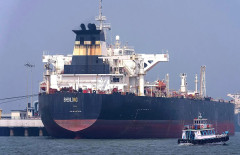
Market indicators indicate that a number of international oil companies, including major companies such as ExxonMobil and BP, have begun to reassess their presence in Iraq or reduce the size of their operations and cadres, in light of the escalation of security risks in some production areas, especially the southern fields.
And this comes in a sensitive context characterized by frequent targeting of some facilities or infrastructure associated with the energy sector, which is reflected in the stability of supply chains and increases the cost of operation, as well as slowing down development and exploration.
Infrastructure and transport projects linked to global supply chains are also affected, highlighting the vulnerability of long-term projects to any disruption in the security environment.
Second: Repositioning of capital and declining investment appetite
Iraqi parliamentarian Jamal Cougar said investments in Iraq are sensitive to security and political changes, noting that the current stage is witnessing a "gradual exit of capital" rather than a sudden withdrawal.
And Koger points out that investors are moving to reduce risk by freezing expansions or postponing new projects, while redirecting part of the capital toward more stable markets. And he adds that “short-term funds” are the most vulnerable to volatility, moving quickly in response to any signals of tension, which is reflected in the high demand for the dollar within the domestic market.
He also pointed out that some foreign companies have begun withdrawing their cadres or reducing their presence as a precautionary measure, which reflects a state of heightened caution in the business environment.
Third: Decline in confidence and its impact on the real economy
From an academic perspective, Ali Abdul Hadi, an economics professor at Anbar University, said the main challenge lies not in the volume of registered investments, but in the sustainability of actual investment activity, which is closely linked to the level of overall stability.
And Abdul Hadi warns that the withdrawal of companies or the reduction of their operations is not limited to the flow of capital, but extends to disrupting the transfer of technology, delaying the development of oil fields, raising the cost of production, in addition to affecting supply chains.
He also points out that continuing this trend could lead to a “long-term loss of confidence,” which requires policies that go beyond traditional tools, by providing real sovereign guarantees, enhancing the business environment, and reducing excessive engagement with geopolitical variables.
Fourth: Local market distortions and liquidity behavior shifts
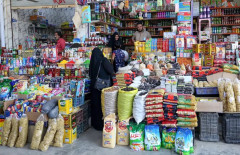
In a broader reading of the impact of tensions, economist Mustafa al-Faraj explains that the risk is not limited to capital outflows, but extends to "distorting liquidity behavior within the economy."
In the face of uncertainty, domestic capital tends to shift from productive investment to hoarding or speculation, especially in the currency market, which leads to a decline in the circulation of money within the real economy, and weakens commercial and productive activity.
And warns Al-Faraj that this shift is reflected in the exchange rate even in the absence of a large actual exit of funds, and leads to a slowdown in growth in non-oil sectors such as real estate, tourism and transport, which deepens the imbalance of the structure of the economy.
Fifth: Government reassurance and financial absorption capabilities
The prime minister's financial advisor, Mazhar Mohammed Salih, said Iraq has "financial and trade safety margins" that can absorb part of external shocks, thanks to the strength of foreign reserves and the stability of commodity stocks.
Saleh points out that the government is constantly following regional developments, and is working to manage risks by maintaining exchange rate stability and ensuring the flow of foreign trade.
Iraq still has significant investment opportunities, especially in the energy and infrastructure sectors, he said, but restoring investment momentum requires greater regional stability, enhanced domestic confidence and an improved business environment.
abstract
The current data reflect that the Iraqi economy is at a critical juncture between the opportunity to attract major investments and the fragility of the geopolitical environment surrounding it. And while official figures suggest a high investment volume, actual indicators reveal a high level of risk sensitivity and a high reliance on security and political stability.
And with regional tensions and uncertainty surrounding the future of U.S.-Iran relations, Iraq’s investment environment remains volatile, necessitating integrated economic-political approaches to enhance stability and reduce the economy’s vulnerability to external shocks.


comments