By: Claire Astrid is a geopolitical analyst at Janes, specializing in Chinese and Russian investments in the Middle East, North Africa and Central Asia
Iraq is a central arena of competition between the United States and China, as it seeks to balance Washington-led security and reforms with rapid Chinese state-driven investments in infrastructure. With China dominating foreign investment, Iraq's success depends on its ability to integrate China's implementation expertise with US institutional support, ensuring oversight, knowledge transfer, and anti-corruption to achieve sustainable development amid superpower competition.
Troubled background
Since the Iraqi government declared victory over ISIS in December 2017, both the KRG and the federal government in Baghdad have made specific attempts to attract investment. One example is the "localization" fund established in October 2024 in partnership with the Egyptian company Elsewedy Electric to attract investments in strategic non-oil projects with the aim of diversifying the economy.
Despite a relative return to stability, tension has remained due to Iranian-backed Shia armed groups, the potential return of ISIS, political changes in Syria, as well as regional turmoil since October 2023.
U.S. and Chinese investment models converge
The U.S. and Chinese investment models differ significantly; however, Iraq can benefit from both models to maximize its development and reconstruction potential. US investment focuses on transparency, regulatory reforms, and community participation, while the Chinese model emphasizes rapid delivery of mega-projects through state-directed capital with limited political conditions.
Economically, U.S. investments often involve public-private partnerships and market liberalization, while Chinese investments are channeled through state-owned enterprises and preferential loans, as in the oil-for-infrastructure deals in Iraq.
American strategy: Security, Reform, and Investment
Since the 2003 US invasion, Washington has adopted a multi-pronged approach in Iraq that includes establishing military bases to support the new government and counterterrorism missions, while relying on development institutions such as the World Bank and USAID to provide support and relief through the Iraq Rapid Assistance Program (IRAP). The United States also supported IMF loans for reconstruction while encouraging fiscal reforms.
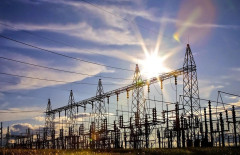
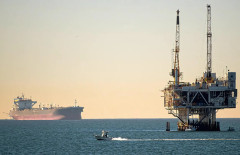
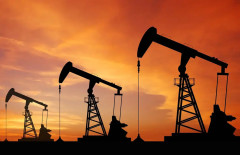
With the victory over ISIS, U.S. companies such as Baker Hughes and GE Power began making significant investments in Iraq's power grid, including the rehabilitation of the 125-megawatt Al-Quds power plant and the optimization of 46 gas turbines in 12 plants. U.S. companies have also been involved in the development of oil fields such as the Ben Omar River in southern Iraq, which is expected to produce 300,000 barrels per day and 700 billion cubic meters of gas per year, while involving local Iraqi companies in these projects.
China's strategy: Infrastructure without interference
China has invested in Iraq despite its instability, capitalizing on access to oil and strategic infrastructure. Since 2015, Chinese companies have invested more than $10 billion in Iraq as part of the Belt and Road Initiative, with Iraq exporting most of its crude oil to China.
China National Petroleum Corporation (CNPC) bought the first oil licenses after the US invasion and won major contracts such as the $3.5 billion development of the Al-Ahdab field in 2008, and has invested in roads, telecommunications, and education. Huawei has invested in telecommunications infrastructure, solar energy and the education of Iraqi cadres in Iraqi and regional universities.
In 2019, Baghdad signed a 20-year, $10 billion infrastructure-for-oil deal, followed by a deal in 2021 to finance 1,000 schools for oil, with Chinese companies controlling 7.27% of Iraq's oil and gas projects, compared to less than 2% for U.S. companies.
China is characterized by its emphasis on non-interference in Iraq's internal affairs, a strategic advantage that gives it a relative advantage over the United States in attracting investments.
Future: Decisive decisions
Iraq has the potential to benefit from both models by utilizing rapid infrastructure delivery from China to meet critical needs, while leveraging U.S. partnerships to strengthen institutional capacity, improve transparency, and support entrepreneurship. To achieve this, the government should develop a clear national investment strategy, ensure knowledge transfer, establish a special body to combat corruption in foreign-funded projects, and possibly establish a sovereign wealth fund to ensure economic stability, improve social services, and increase national wealth from oil revenues for future generations.
If the strategy succeeds, Iraq could become a model for other countries on how to balance the US and China in a "win-win" manner. The absence of China's controversial military history in Iraq, unlike the United States, remains a significant advantage that influences how the Iraqi government makes its decisions on the most reliable investment model to achieve sustainable development.


comments