

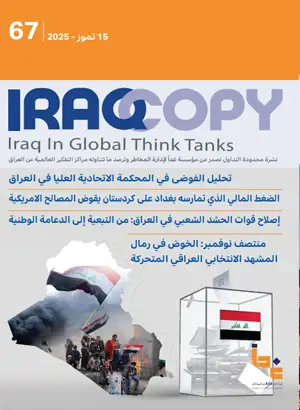

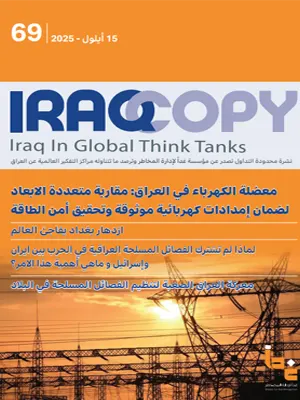

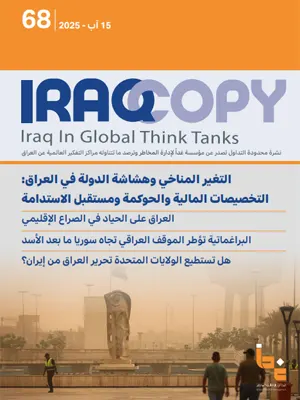
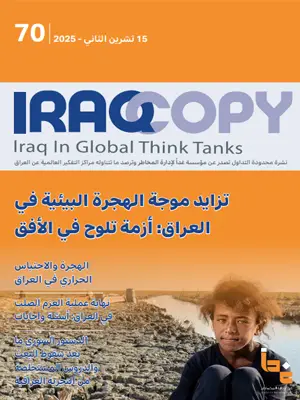

The Ghadan Risk Management Foundation has released the 64th issue of its IraqCopy newsletter, which includes four analytical articles covering security, economics, foreign policy, and regional conditions surrounding Iraq.
The Future of Foreign Forces in Iraq and Syria
In the first article, "Beyond the Coalition: Assessing the Next Steps for Foreign Forces in Iraq and Syria," published by Newlines, journalists Vladimir van Wolgenburg and Miles P. Kages explore the future of the U.S. military presence in the region. Vladimir Van Wulgenburg and Miles P. Kagis explore the future of the U.S. military presence in the region, arguing that its continuation depends on President Donald Trump's foreign policy. The article also discusses the impact of the fall of the Assad regime on the deployment and positioning of U.S. forces in Iraq and Syria.
Stopping the Electricity Exemption: Baghdad and Washington's vision
The second article, published on the Atlantic Council website, titled "Washington Ends Iraq-Iran Electricity Waiver," examines the Trump administration's decision to end the waiver that allows Iraq to import electricity from Iran. The authors, Ahmed Tabakjali and Anthony Faff, argue that the decision may push Iraq to diversify its energy sources, while Washington seeks to use the decision as an additional leverage in negotiations with Tehran.
Regional security starts at home
In the third article, "Regional Security Starts at Home: Iraq's Vital Role in Promoting Stability," retired Colonel Abbas Dahuk, a former military advisor to the US State Department, reviews the role that Iraq can play through three strategies: adopting a neutral foreign policy, regulating armed factions, and strengthening border security, especially with Syria: Adopting a neutral foreign policy, regulating armed factions, and strengthening border security, especially with Syria. The article is based on the author's participation in the seventh Baghdad International Dialogue Conference.
The Shiite street's attitude toward the new Syria
Finally, in an article published by the Foundation for the Defense of Democracy entitled "Why Iraqi Shiites Hate the New Syria and its Leader," Ahmed Shaarawi discusses the rise of anti-Syrian rhetoric after the fall of the Bashar al-Assad regime. Shaarawi attributes this hostility to Ahmed al-Shara'a's role in bringing down the Assad government, as well as the attitudes of some Iraqi politicians aligned with Iran toward the new government in Damascus.
Fill in the fields, and we will contact you to complete the submission process.
comments