In his speech at the Baghdad International Energy Forum, Deputy Prime Minister and Minister of Oil Hayan Abdul Ghani stressed that Iraq is taking confident steps towards strengthening its position as one of the key players in the global energy market, stressing that the government and the ministry are working seriously on the energy transition file in order to achieve sustainable growth.
Holding the forum in Baghdad reflects Iraq's strong and growing role in the international arena, he said, noting that his country is well positioned for dialogue on energy issues and the shift towards more sustainable alternatives.
He explained that one of the government's strategic goals is to diversify energy sources to account for 30% of the energy mix by 2040, reflecting Iraq's commitment to keep pace with global energy shifts and reduce dependence on fossil sources alone.
The minister added that Baghdad's hosting of this major international event is a clear message that Iraq is regaining its position as a reliable and sustainable energy partner, stressing that his country will continue to seek a balance between meeting domestic needs and supporting the stability of global energy markets.
He stressed that holding the Baghdad International Energy Forum is a message of confidence in Iraq's role and status, and proof that it is moving confidently towards leadership in the energy sector regionally and globally.
For a century, Iraq has been a key pillar in global energy markets, and today it continues to play its role responsibly through its position in OPEC and OPEC+, where it always seeks to promote market stability and ensure a balance between supply and demand to serve producers and consumers alike, the Minister pointed out that Iraq, with its second largest oil reserves in the region, large gas reserves, and its strategic geographical location connecting the Arabian Gulf, the Eastern Mediterranean, Turkey and Europe, is qualified to be a pivotal center for global energy and an effective element in shaping the future of the oil and gas market, as well as in the oil and gas market.
The Minister added that the Iraqi government and the Ministry of Oil are working to develop the energy sector to be a beating heart of economic development and a tool for achieving sustainable growth, and the recent years have witnessed the launch and implementation of a number of major strategic projects that constitute a qualitative shift in the structure of this sector.
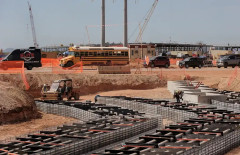
He continued, at the forefront of the projects is the South Integrated Project with Total Energy, the largest newly integrated investment project, which includes the development of major oil fields to increase production, the exploitation of associated gas with a capacity of 600 cubic meters per day, and the establishment of solar power plants with a capacity of up to 1000 MW in its first phase, in addition to the giant sea water project that treats and pumps up to 5 million barrels per day of water for oil injection purposes, a strategic project to ensure the sustainability of production for decades to come.
In the north, the ministry signed a strategic contract with BP to develop four of Kirkuk's historic fields and raise their production efficiency. This project strengthens Kirkuk's position as one of the most important oil centers in the region and achieves the required balance between development in the north and south.
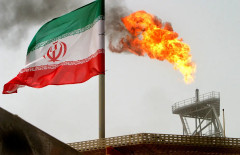
He explained that the issue of investing associated gas was a national priority, after Iraq was burning large quantities of it, and we have started to expand the Basra Gas Company projects, along with other projects in Maysan, Dhi Qar and Kirkuk, with the aim of investing all the gas burned before 2030, which will save the high cost of imports, reduce carbon emissions and improve the quality of the environment.
In the field of crude oil exports, the Minister stressed that we have worked to diversify export lines to ensure greater flexibility and ensure a safe and stable flow to global markets, as the capacities of Basra ports have been enhanced and raised their export capacity, and the development of the Ceyhan line through Turkey and addressing the existing challenges in it, as well as studying new options for export through Jordan and Syria, and exploring other possibilities through the large port of Faw and linking it to the development road project.
The Minister said that Iraq does not consider energy in isolation from the environment and climate commitments. After Iraq joined the Paris Climate Agreement, remarkable progress has been made in meeting more than our voluntary commitments of 2%, and we have set our national goal to reduce emissions by 13% conditional on international support, noting that the government is working on preparing a draft Iraqi green building standard to be a national framework for sustainable construction, and we have already started integrating solar and wind energy projects into the national system, to be part of the Iraqi energy mix over the coming decades.
"Our vision for the future in the coming years and decades is for Iraq to be a global energy hub linking north and south, and to diversify the energy mix to include 30 percent renewable sources by 2040," he said.
"We must fully utilize the associated gas and turn it into a source of national economic strength, strengthen the refining and petrochemical sector to achieve added value and reduce dependence on imports, and build strategic partnerships with international companies based on technology transfer, national capacity building, and balanced development," he added.
The Minister concluded his speech: The convening of this forum in Baghdad is an announcement of a new phase of cooperation and partnership, and a clear message that Iraq is regaining its position and presenting itself to the world as a reliable partner in energy security and sustainability.



comments