France’s allowing Framatome to expand nuclear fuel production at Germany’s Lingen plant has sparked debate over Europe’s continued reliance on Russian technologies, despite EU efforts to end its association with Russian energy resources.
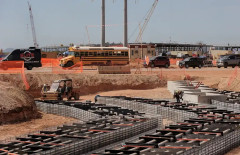
The project aims to produce fuel for European reactors designed according to the Soviet model "VVER", but it relies on licenses, expertise, equipment and components provided by "TVEL", the nuclear fuel arm of the Russian state company "Rosatom".
According to the license issued by the authorities of the state of Lower Saxony, additional security measures were imposed to face possible risks, including the manipulation of fuel components, the use of Russian equipment and software, as well as espionage, sabotage and cyber intervention.
The license requires full inspection of fuel rods supplied from Russia, an independent review of equipment and software, and the separation of the Russian digital architecture from the rest of the plant's systems. Representatives of TVEL and Rosatom are also prohibited from entering the facility, except in exceptional cases subject to prior security approvals and assessments.
And a report by Ukraine’s DiXi Group suggests that these measures reduce risk but do not eliminate its source, which is continued reliance on a Russian state-owned company within a sensitive European structure.
The project is also economically and strategically problematic, offering it as a way to diversify nuclear fuel supplies, while shifting some of Russia's technological dependence into the EU rather than ending it.
The German licensing procedure does not include an assessment of the risks of energy dependence or the compatibility of long-term cooperation between Framatome and Rosatom with the strategic interests of Germany and the EU, as it mainly focuses on safety and technical security requirements.
And this comes in conjunction with EU funding for the SAVE project, also coordinated by Framatome, with the aim of developing European fuel for VVER reactors, based on the design, manufacture and supply chain free of Russian technologies.
And so, Europe is moving in two opposing directions: the first seeks to phase out Russia’s nuclear dependence, while the second allows for the introduction of this dependence into facilities within the EU.
The case raises the question of the Lingen plant's ability to adapt if the EU decides in the future to tighten restrictions on the Russian nuclear sector or to phase out its technologies once and for all, and whether current investments will turn into hard-to-operate assets before recovering their costs.
The report concludes that the controversy is not about a single production line, but about the concept of European strategic independence, and the extent to which cooperation with Rosatom is consistent with the Union's policy of ending dependence on Russian energy resources and technologies.


comments