Yousef Khalaf Yousef - President of People's University
In one of the most sensitive confrontations in decades, the conflicting parties announced today a ceasefire after 12 days of mutual bombardment between the entity and Iran, which reveals the features of fundamental shifts in the regional and international power equation. In light of this unprecedented escalation, nine major axes that redraw the maps of balance and influence in the Middle East and cast a shadow over the Iraqi reality as well.
1. The Entity Project in the Middle East: From Security to Hegemony
The entity no longer views the conflict from a purely security perspective, but it has become clear that it seeks to implement a political-military project that reshapes the region. Through its (Israel's) growing relations with the normalization countries, it is working to form a regional bloc in which it is the decision-maker and dominates the economy, technology and regional security, leading to the dream of "Greater Israel." However, these calculations face structural challenges related to the geography of Arab consciousness and the legacy of the protracted conflict. But these calculations face structural challenges related to the geography of Arab consciousness and the legacy of the century-old conflict.
2. Israel's structural mistake: Ignoring the historical memory of the conflict
Despite its military advances, Israel made a fundamental mistake when it ignored that the conflict with the owners of the land is not resolved by force alone. The continuous bombing and destruction of innocent people in Palestine, Syria, Lebanon, and even Iraq has not and will not be erased from people's memories, but rather feeds the narratives of resistance and reignites hatred. Ignoring this emotional dimension is a strategic failure that cannot be remedied by the superiority of airplanes or the accuracy of missiles.
3. Iran: The unconventional power that exceeded expectations
Contrary to the expectations of decision-makers in Tel Aviv and Washington, Iran has shown a capacity for coherent response, advance preparation, and internal cohesion in the face of a strike aimed at the heart of its regime. The concentrated missile response, although it caused massive destruction in some of its strikes, delivered the decisive message: Iran is capable of protecting its regime, is prepared for open confrontation, and is not, unfortunately, Iraq 2003.
4. Begging for US intervention: The moment of powerlessness
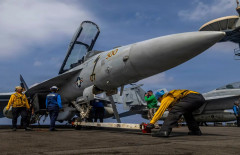
When Israel found itself unable to neutralize Iranian power or destroy its nuclear facilities, it resorted to begging for direct US intervention. This request was not an expression of a solid alliance, but rather a cry of political and military helplessness, aimed at completing the task that Tel Aviv was unable to do. But it came at a confused American moment, amid a global decline in the popularity of military interventions.
5. America and double standards: International legitimacy in the wind
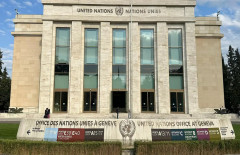
The US-Israeli attack on Iranian nuclear facilities, outside the framework of Security Council resolutions, reaffirms that international law is a tool used by the major powers when they wish and ignored when it does not serve their interests. It has been confirmed that the Security Council, as it is now, has lost much of its political legitimacy, and that the UN is merely a media platform that does not deter the strong and does not do justice to the weak.
6. Bombing Al Udeid: Turning point or end notice?
The Iranian attack on Qatar's al-Udeid base was a watershed moment. Immediately afterward, there was talk of a ceasefire, suggesting one of two possibilities: Either the Iranian response turned the tables and frightened the coalition, or the war was designed to reach this point, preventing it from expanding into a full-blown regional war. Either way, Iran has proven that it not only responds, but manages the confrontation with calculated tactics.
7. Iranian interior: Deterrence battle doesn't hide security wounds
Despite the political and media victory, Iran needs a comprehensive review at the security level. The war was preceded by a series of assassinations and intelligence penetrations that reveal serious weaknesses within the system. The aftermath of the war should be a phase of internal restoration, in which Tehran resets its security compass, especially in light of the growing penetration of the Mossad and Western intelligence.
8. No Israeli victory ... despite the bombing and destruction
Despite the intensity of the bombing, Israel did not achieve any strategic objective: It did not topple the Iranian regime, did not destroy nuclear facilities, did not stop the missile program, and did not crush Iran's allies. Rather, it has further complicated the scene and raised the level of international and regional hostility against it, making talk of an "Israeli victory" a mere media illusion.
9. Iran's rise as a regional deterrent
Precision missiles, multiple fronts of response, and steadfastness under pressure have restored Iran's image as a regional power to be reckoned with. Perhaps for the first time in years, the region's cards are being rearranged on the basis that Iran is not only part of the scene, but one of its creators. The new Middle East may not be subject to the dream of a Greater Israel, but rather a complex mix of Iranian influence, open conflict, and fragile alliances.
Implications for Iraq
1. Iraq as an Indirect Engagement Ground
During this war, Iraq has become an arena for sending and receiving military messages, through air corridors for missiles, airplanes, and rockets. This puts Iraq at the center of the conflict equation, without being a direct party, which forces it to reconsider its security policies and regional relations.
2. The threat to national sovereignty
The mutual attacks showed the fragility of Iraqi sovereignty, as sites on its territory were targeted without coordination, requiring a firm national stance to ensure that Iraq is never again used as a theater of reckoning.
3. Strengthening resistance movements inside Iraq
A successful Iranian response would energize allied Iraqi factions, which could increase pressure on the U.S. presence and complicate domestic stabilization efforts.
4. Direct economic and security implications
The war has raised regional tensions, affecting oil prices and weakening confidence in investing in Iraq. The threat of a wider war has also been enough to destabilize the domestic security situation.
Conclusion
Despite the ceasefire, the conflict is not over and has entered a new, potentially more complex phase. Israel has not won, and Iran has not been defeated. The entire region is facing a moment of redrawing the equations, and the old calculations are no longer valid. Iraq is at the center of these changes and must rebuild its national strategy to ensure its stability and security in light of the clash of the giants






comments